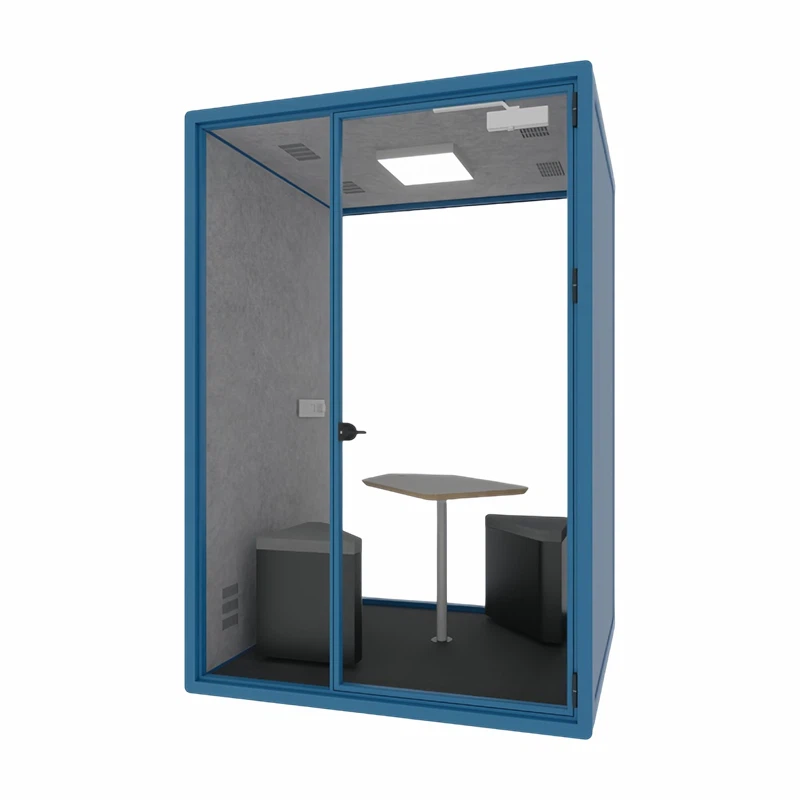
Soundproof office block, through modular design, sound absorbing materials, flexible layout, can be adapted to various office scenarios. Its core strengths lie in balancing privacy and space utilization. The following is an analysis of typical application scenarios and their adaptation logic:
1. Open office areas: reduced noise interference and increased concentration.
Scenario characteristics: open-plan workspaces are mainly shared spaces with high employee density. Noise from keyboard typing, phone conversations and running devices can easily cause a "noise amplification effect" that can affect productivity.
Modular combination: Separate workstations are divided using removable partitions (e.g. glass + acoustic-cotton composite structures), which maintain visual transparency while reducing sound transmission through physical barriers.
Sound absorption design: Install sound-absorbing panels or hanging soundproof curtains in the ceiling to absorb mediumto high frequency noise (such as human voices) and reduce echo interference.
Flexible adjustment: cubicle layout can be quickly adjusted to changes in team size,such as expansion or contraction of the project team, to avoid space waste caused by fixed walls.
2. Creative team: Balancing collaboration and independent writing
Scenario Characteristics: Creative work such as design, research and development and copywriting requires frequent sharing of inspiration, but deep thinking requires a quiet environment. Traditional open-plan offices can easily lead to overcooperation or interference.
Semi-open cubicles: Use low dividers (e.g. 1.2-1.5 m) or transparent glass that maintain visual contact while creating a relatively independent environment through sound attenuation.
Functional Zoning: Integrate small meeting corners, phone booths or muted cabins into cubicles for instant discussion or personal calls to avoid disrupting others' workflows.
Personalized Customization: Inspire creativity by adding adjustable partition angles, greenery or soft furnishings to create an atmosphere that aligns with the team culture.

3. Customer Service Positions: Privacy and Enhancing Professional Image
Scenario Characteristics: Customer service, sales and legal positions often handle sensitive information (such as customer data and contract terms). Traditional open-plan office is prone to information leakage risks, noisy environment will have a negative impact on communication quality.
High Sound Insulation: Double glazed windows or thickened absorbent cotton partitions ensure calls are not leaked and reach STC (sound transmission loss) over 35 dB.
Independent access design: Each partition is equipped with a separate access control or soundproof curtain to prevent unauthorized access and improve security.
Device integration: Pre-installed wiring interfaces within partitions support seamless connectivity of devices such as phones and computers, maintaining continuity of professional service flow.
4. INTRODUCTION Interim project team: Rapid Deployment and Flexible Adjustment
Scenario Characteristics: Short-term projects (e.g., new product development and event planning) require rapid team formation, but traditional fixed-office renovations are costly and difficult to meet timeliness requirements.
Plug-and-play: Deployment within 24 hours without professional construction using standardized partition components such as modular frames and panels.
Scalability: The number of partitions can be increased or decreased depending on the progress of the project, or the height/ location of partitions can be adjusted to accommodate different team sizes (e.g., from a team of 5 to a a 20-person team).
Cost Optimization: compared to fixed walls, partitions can be reused, reducing the cost of renovating long-term office space.
5. Hybrid Office Mode: support for remote and on-site collaboration
Scenario Characteristics: In a hybrid office environment, some employees are in the office while others visit remotely. During remote meetings, it is important to ensure a consistent online and offline communication experience while avoiding noise interference from the live environment.
Soundproof Enclosure Integration: Install a small soundproof cover (complete with soundproof doors, ventilation systems and screen) in a soundproof room for remote meetings or priority tasks.
Acoustic Optimization: Soft furnishings such as carpets and sound-absorbing ceilings reduce overall ambient noise, ensuring remote participants can hear the scene clearly.
Flexible Switch: Compartments can be quickly converted to either "collaboration mode" (removing the partition) or "stand-alone mode" (adding a soundproof panel) to accommodate different work scenarios.

6. INTRODUCTION Healthy office needs: Reduce Noise Stress and improve employee well-being
Scenario Characteristics: Prolonged exposure to noisy environments can easily lead to increased stress, distraction and even hearing loss. Businesses need to improve their office environments through space design.
Acoustic Comfort: Cubicles reduce ambient noise to below 50 decibels (close to library level), in line with World Health Organization recommendations for health offices.
Mental Safety: Personal cubicles provide employees a "personal space" that reduces observed anxiety and improves job satisfaction.
Green design: Combine sound absorbing plants (such as Monstera deliciosa and Ivy) or natural materials (such as cork dividers) to further purify the air and reduce noise reflection.